


04/10/2026 Humanity’s Giant Leap: How Artemis II Is Shaping the Future of Space Exploration
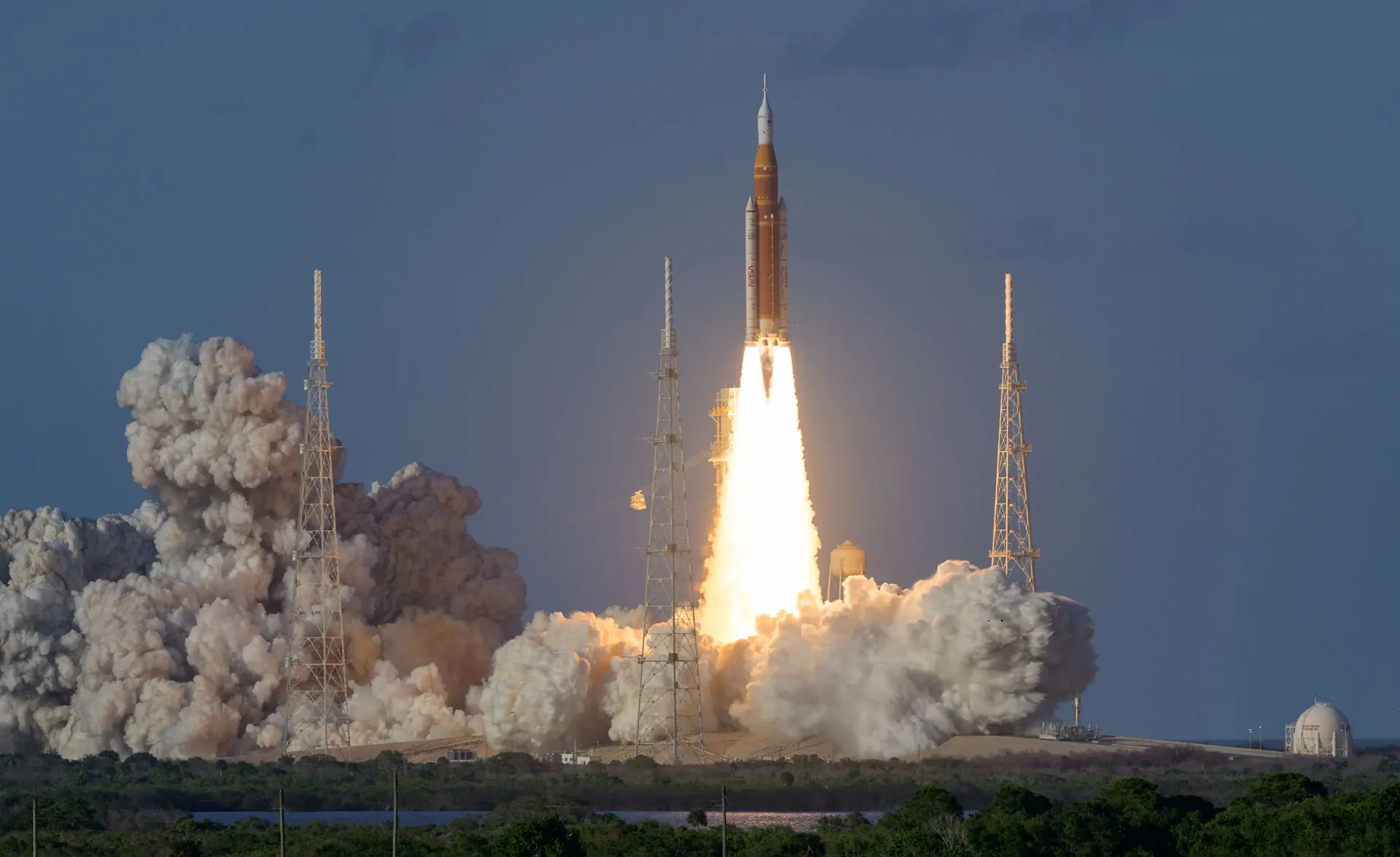
Category:On April 1, 2026, the ground shook at Launch Complex 39B at NASA’s Kennedy Space Center in Florida as the Space Launch System rocket carried four astronauts skyward on the most ambitious crewed mission since the Apollo era. At the base of that rocket, four RS-25 engines produced more than two million pounds of thrust, powering a journey that would carry humanity farther from Earth than ever before.
At Moeller Aerospace, we have a personal stake in that achievement. Moeller Aerospace is the sole-source manufacturer for many of the rotating and non-rotating turbomachinery for the liquid oxygen and liquid fuel pumps on the RS-25 engines, which include dozens of part numbers and hundreds of individual components machined at both our Harbor Springs and Wixom facilities in Michigan. It is a responsibility we carry with pride. But the story of Artemis II is far bigger than any one company or any one rocket. It is a story about where humanity is going next, and why it matters.
The Artemis II Mission
Artemis II is the first crewed mission beyond low Earth orbit since Apollo 17 in December 1972. Commander Reid Wiseman, pilot Victor Glover, mission specialist Christina Koch, and Canadian Space Agency astronaut Jeremy Hansen flew aboard the Orion spacecraft – named Integrity by the crew – on a ten-day lunar flyby. The mission also marks a series of historic human firsts: Glover is the first Black astronaut, Koch the first woman, and Hansen the first non-American to travel this far from Earth.

Image Credit: NASA https://www.nasa.gov/artemis-ii-multimedia/
Records Set
Farthest Humans Have Ever Traveled
On April 6, 2026, six days into the flight, the crew surpassed the longstanding distance record set by Apollo 13 in 1970. According to NASA, they reached approximately 252,756 miles from Earth at their farthest point.
Canadian astronaut Jeremy Hansen marked the moment with a message to Mission Control: “From the cabin of Integrity here, as we surpass the furthest distance humans have ever traveled from planet Earth, we do so in honoring the extraordinary efforts and feats of our predecessors in human space exploration. We most importantly choose this moment to challenge this generation and the next to make sure this record is not long-lived.” (NASA, April 6, 2026)
First Human Eyes on the Lunar Far Side
The crew also became the first humans to observe the Moon’s far side with their own eyes, capturing photographs and narrating their observations in real time to scientists in Houston. The mission additionally set the record for the highest atmospheric reentry velocity of any crewed spacecraft, at approximately 25,000 miles per hour.

Image Credit: NASA https://www.nasa.gov/artemis-ii-multimedia/
The Science
While the records drew headlines, the science aboard Artemis II is what will shape the decades of exploration that follow. NASA designed the mission’s research program specifically to lay the groundwork for sustained human presence on the Moon and, eventually, Mars.
Observing the Moon
Artemis II carried ten lunar science objectives into the flyby. NASA identified approximately 35 geological features for the crew to study, with astronauts working in pairs to photograph sites and describe what they saw in real time to a science team at Johnson Space Center. One target site is a candidate landing zone for a future uncrewed mission. The crew also observed the lunar south pole, a region where humans could set foot as early as 2028.
The AVATAR Experiment
One of the mission’s most ambitious science payloads is AVATAR, short for A Virtual Astronaut Tissue Analog Response. The experiment uses organ-on-a-chip devices, each about the size of a USB drive, built from actual cells donated by the Artemis II crew. Flying alongside the astronauts, these chips are exposed to the same deep space radiation and microgravity, making this the first time organ chip technology has operated beyond the Van Allen belts, according to NASA Science.
The chips focus on bone marrow, the tissue most sensitive to radiation and responsible for producing the body’s blood and immune cells. When the chips return to Earth, researchers will conduct single-cell RNA sequencing to measure how thousands of genes responded to the journey. The results will be compared against crew samples collected before and after flight.
Lisa Carnell, director of NASA’s Biological and Physical Sciences division, described what is at stake: “As we go farther and stay longer in space, crew will have only limited access to on-site clinical healthcare. Therefore, it’ll be critical to understand if there are unique and specific healthcare needs of each astronaut, so that we can send the right supplies with them on future missions.” (NASA Science, 2026)
Beyond spaceflight, the research could advance cancer treatment, drug testing, and personalized medicine on Earth.
Crew Health and Performance
Each crew member wears a wrist-mounted sensor that continuously tracks stress, movement, sleep, and cognitive performance, giving researchers an unprecedented look at how the human body and mind respond to deep space. Astronauts also collected saliva samples throughout the mission to study immune changes linked to radiation and isolation, and to determine whether dormant viruses become reactivated far from Earth, a phenomenon previously observed on the International Space Station.
Testing Orion’s Systems
Artemis II is also a rigorous hardware test flight. The crew evaluated life support systems, practiced manual spacecraft operations, tested propulsion and navigation, and rehearsed emergency procedures. Pilot Victor Glover conducted manual handling trials to assess Orion’s maneuverability for future docking with lunar landing vehicles. Every system that performs reliably here reduces risk for the missions that follow.
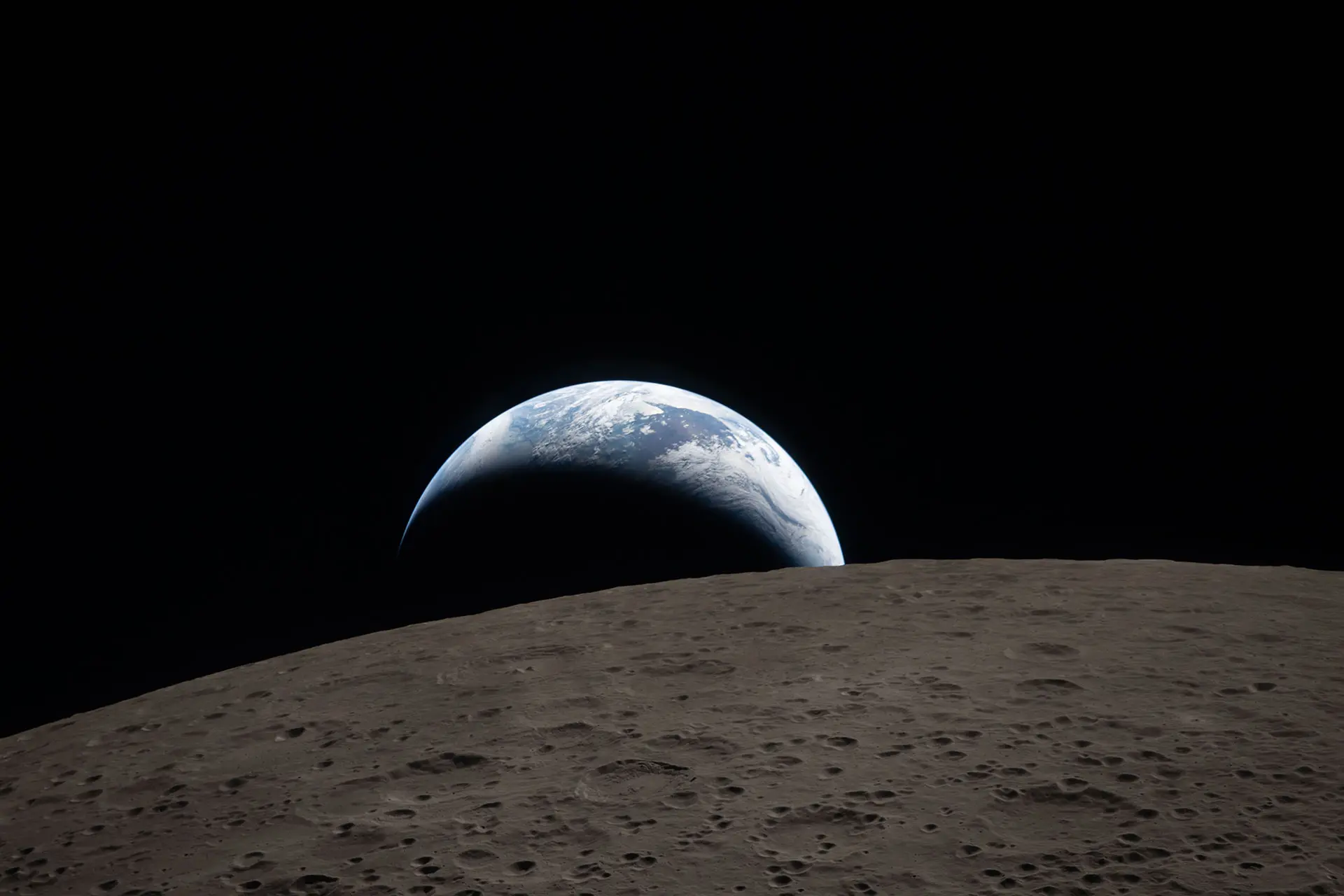
Image Credit: NASA https://www.nasa.gov/artemis-ii-multimedia/
What Is Next for Space Exploration?
A crewed lunar landing is planned for Artemis IV in 2028, with a lunar gateway station and permanent surface base targeted for the early 2030s, and crewed Mars missions on the horizon beyond that. Every record broken and every data point collected on Artemis II brings those goals closer to reality.
Dr. Lori Glaze, acting associate administrator at NASA, said it best when the crew broke the distance record: “At NASA, we dare to reach higher, explore farther, and achieve the impossible. They are charting new frontiers for all humanity… Their dedication is about more than breaking records; it’s fueling our hope for a bold future.” (NASA, April 6, 2026)
At Moeller Aerospace, we share that hope. We are proud to contribute precision craftsmanship to a mission that belongs to all of humanity, and we are already manufacturing parts for the Artemis missions that follow.
The next chapter of human exploration is being written right now. We are grateful to be part of it.
Back to all Blog Posts